
"Arabica growth"
5000 article(s) found

Demand for Robusta coffee beans rises sharply. Robusta coffee beans exported to Vietnam will innovate.
Professional coffee knowledge exchange more coffee bean information please follow the coffee workshop (Wechat official account cafe_style) although Robusta is one of the three major varieties of coffee, but his chromosome number is different from Arabica, so the characteristics are quite different: the same number of coffee beans with twice as much caffeine as Arabica, can adapt to lower elevations and difficult growth rings
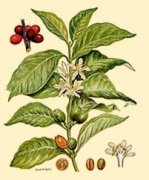
Coffee beans Coffee
There are about 60 species of coffee in the world, of which only 25 species are cultivated to make coffee, of which only 4 species are used as commercial coffee: large fruit coffee (Coffea liberica), medium fruit coffee (Coffea canephora), small fruit coffee (Coffea arabica) and high yield coffee (Coffea dewevrei). These are botanical names. Coffee in the world at present

Boutique Coffee the basic concept of coffee that must be known about coffee
First, know coffee 1, what is coffee (scientific name: Coffea arabica) also known as coffee tree, Arabica coffee, etc., is the national flower of Yemen. Before the 6th century AD, Yemen was called Arabian, so the coffee trees shipped from them to other places were also called Arabian coffee trees. The name coffee comes from the Arabic Qahwah, which means plant drink.

A brief introduction to the origin, development, history and culture of El Salvador Himalayan boutique coffee beans with sweet almonds and tea flavor.
In El Salvador, the coffee beans rich in the Kuskabapa region are the best, slightly lighter, fragrant, pure and slightly sour. Like Guatemala and Costa Rica, coffee in El Salvador is graded according to altitude, and the higher the altitude, the better the coffee. The best brand is Pip, whose quality has been recognized by the American Organic Certification Society. In addition

New York Futures: Arabica Coffee Futures turn up to fall
New YORK / London Nov 24 (Reuters)-Arabica coffee futures closed lower on Monday, rising more than 3% after being pushed up by short covering, sending Arabica coffee futures higher after investors sold off. Cocoa futures continued their rally, attracting buyers to enter the market after rising above the previous day's high, while raw sugar and white sugar futures fell as rainfall in Brazil boosted the growth prospects of crops next year. Feel on Thursday
Robusta coffee beans popular demand rises sharply Robusta coffee beans exports will hit a new high
Professional coffee knowledge exchange More coffee bean information Please pay attention to Coffee Workshop (Weixin Official Accounts cafe_style) Although Robusta is one of the three major coffee varieties, his chromosome number is different from Arabica, so the characteristics presented are quite different: the same number of coffee beans have twice as much caffeine as Arabica, which can adapt to lower altitudes and difficult growth rings.

The planting conditions, types and methods of coffee. What are the favorable conditions for coffee cultivation?
Professional coffee knowledge exchange more coffee bean information Please pay attention to the planting conditions of coffee in coffee workshop (Wechat official account cafe_style) Coffee can not be grown in any environment, because it was originally a plant growing in the tropical rain forest, in the process of phylogeny, it forms the habit of requiring calm wind, cool, shady or semi-shaded and humid environment. Therefore, coffee has a good effect on planting conditions.

El Salvador Coffee Flavor Taste Introduction El Salvador Coffee Region Fine Coffee Beans
Salvadoran coffee accounts for 40 per cent of the country's exports and is picked in November and December and from January to March of the following year. Green bean exports continue almost throughout the year. Coffee is produced in seven of the country's 14 departments, with chalatenango and santa ana in the north-west the most abundant. El Salvador produces 100% Arabica coffee, of which 68% is Arabica.

The growth process of Coffee Tree introduction to the method of flavor description in planting environment and region
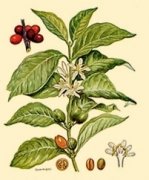
The growth process of the coffee tree is described by the flavor description of the planting environment and the region. The taste treatment method introduces that the immature coffee is actually green. After a mature period of 6 to 7 months, the mature skin is red, because its shape is similar to that of cherries. Therefore, foreigners call the mature coffee a cherry (Cherry). Under the bright red skin, it is an ugly skin.

The rich flavor of Salvadoran coffee the manor area introduces Renas Manor.
Central American countries generally distinguish quality grades by altitude, such as Costa Rica, Guatemala, Mexico, Honduras and other countries. Similarly, El Salvador is graded by altitude. At high altitudes, due to the cold climate and slow coffee growth, the density of raw beans will be higher, the hardness will be stronger, and the unique sour feeling of Arabica will be more.
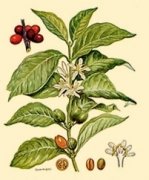
The basic concept of coffee beans
There are more than 60 species of coffee plants in the world, only 25 species are cultivated for coffee production, of which only 4 species are used as commercial coffee: Coffee liberica, Coffee canephora, Coffee arabica and Coffee deweverei, which are botanical scientific names. Coffee in the world today.
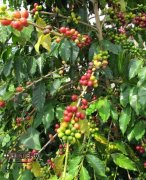
Basic knowledge of boutique coffee varieties of coffee trees
Coffee is a perennial evergreen shrub or small tree of Rubiaceae. It is a horticultural perennial cash crop with the characteristics of fast growth, high yield, high value and wide market. Wild coffee trees can grow to a height of 5 to 10 meters, but coffee trees planted on the manor are often cut to less than 2 meters in order to increase their fruit and facilitate harvesting. The opposite leaves of coffee trees are long oval.
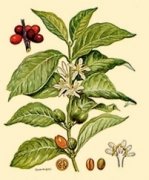
A family of coffee beans
There are about 60 species of coffee in the world, of which only 25 species are cultivated to make coffee, of which only 4 species are used as commercial coffee: large fruit coffee (Coffea liberica), medium fruit coffee (Coffea canephora), small fruit coffee (Coffea arabica) and high yield coffee (Coffea dewevrei). These are botanical names. Coffee in the world at present
A family of coffee beans
There are about 60 species of coffee in the world, of which only 25 species are cultivated to make coffee, of which only 4 species are used as commercial coffee: large fruit coffee (Coffea liberica), medium fruit coffee (Coffea canephora), small fruit coffee (Coffea arabica) and high yield coffee (Coffea dewevrei). These are botanical names. Coffee in the world at present
Coffee beans-Arabica (VS) Robasta (Robusta)
Arabica (Arabica): accounts for 3/4 of the world's output, good quality, because the coffee tree itself is very sensitive to heat and humidity, so its growth conditions are at least 900m higher than the sea level of the highland climate, the higher the height, the better the quality of coffee beans baked. This variety has a low caffeine content (1.1-1.7%). The color of coffee beans is green to light green, oval in shape, furrowed.
Boutique coffee bean Arabica VS Robasta (Robusta)
Arabica (Arabica): accounts for 3/4 of the world's output, good quality, because the coffee tree itself is very sensitive to heat and humidity, so its growth conditions are at least 900m higher than the sea level of the highland climate, the higher the height, the better the quality of coffee beans baked. This variety has a low caffeine content (1.1-1.7%). The color of coffee beans is green to light green, oval in shape and furrowed.

The topographical and climatic conditions in Kenya are very suitable for the growth of high-quality coffee.
Kenyan coffee dates back to 1893. Coffee was later grown on a large scale by the British on the plateau at an altitude of 1400 to 2100 meters, where there is volcanic ash soil rich in organic matter. In fact, most coffee is now grown on the flatter slopes around the snow-capped Mount Kenya (the main peak is 5199 meters high). Kenya is located in the tropical monsoon area.

Boutique Coffee Analysis of Coffee beans
There are about 60 species of coffee in the world, of which only 25 species are cultivated to make coffee, of which only 4 species are used as commercial coffee: large fruit coffee (Coffea liberica), medium fruit coffee (Coffea canephora), small fruit coffee (Coffea arabica) and high yield coffee (Coffea dewevrei). These are botanical names. Coffee in the world at present

What are the requirements of the planting environment for the growth of coffee trees? How long does it take to bear fruit?
Professional coffee knowledge exchange more coffee bean information please pay attention to the coffee workshop (Wechat official account cafe_style) what are the requirements for the growing environment of coffee trees? How long does it take to bear fruit? Although the coffee tree is called a tree, it is actually an evergreen shrub. If it is not trimmed, it can be as high as 3-9 meters. There is a glossy dark green at the top of the leaf and nothing at the bottom of the leaf

Introduction to Arabica Coffee in Fine Colombian Coffee
Colombian Coffee growers High quality Coffee Arabica Coffee in Colombian Coffee Arabica Coffee has to be mentioned in Colombian coffee species (scientific name Coffee Arabica). Arabica coffee trees grow between 900m and 2000 m above sea level; they are hardy, and the suitable growth temperature is 1524 ℃; they need more humidity and the annual rainfall is not less than 1500 mm.